
 Part of what makes a trip to Hochatown so special is the sense that this little corner of Oklahoma history has stories to tell. Long before it became a favorite getaway for cabin lovers, this region was home to a thriving timber town, a moonshine boom, and even a community that now rests at the bottom of a lake. If you love a good backstory as much as a good view, keep reading. When you book your stay with Beavers Bend Creative Escapes, you are not just visiting a scenic spot. You are stepping into a place with a rich and surprising past.
From the Trail of Tears to a Timber Town
Hochatown’s story begins in the 1830s, when Choctaw families settled the Mountain Fork River Valley after being forced west along the Trail of Tears. The town takes its name from Hocha, a Choctaw man who arrived during that difficult journey. For decades, the area was a quiet settlement surrounded by clear water, fertile soil, and towering pines.
That changed around the turn of the 20th century, when the Choctaw Lumber and Coal Company began harvesting the region’s virgin pine. Almost overnight, the sleepy village grew into a busy timber town with its own post office, trading post, and railroad spur. You can dig deeper into this era through the Oklahoma Historical Society.
The Moonshine Capital of Oklahoma
Here is one of our favorite pieces of local trivia. When the timber harvest moved north in the 1920s and Prohibition became federal law, Hochatown found a new way to make a living. The town became known as the moonshine capital of Oklahoma, and its backwoods stills kept the economy humming. Since Oklahoma did not fully repeal Prohibition until 1959, that reputation lasted a good long while. Today, a handful of local distilleries and breweries keep the spirit of that era alive in a perfectly legal way.
The Town Beneath the Lake
Perhaps the most fascinating chapter came in the 1960s. After the Flood Control Act of 1958, the U.S. Army Corps of Engineers began building Broken Bow Lake by damming the Mountain Fork River. The original town of Hochatown was moved lock, stock, and barrel to its current spot along Highway 259. Homes, the church, and even the cemetery were relocated, and the last family left in 1966. The old townsite now sits underwater, and scuba divers still explore its remnants today.
Nearby Broken Bow has its own tale. It was named not for a local legend but for Broken Bow, Nebraska, the hometown of the Dierks brothers who founded the area’s lumber company. Meanwhile, the Beavers Bend State Park structures built by Civilian Conservation Corps workers in 1937 still stand in what is now Oklahoma’s most visited state park.
Experience the History for Yourself
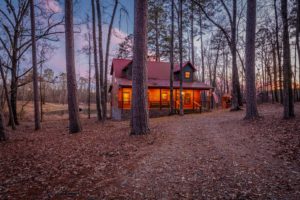 The best way to appreciate this slice of Oklahoma history is to come see it in person. After voting to officially incorporate in 2022, modern Hochatown is thriving once again. Browse our inventory of well-appointed cabins to find your perfect home base, then spend your days exploring the trails, waterways, and landmarks that shaped this remarkable place. Call 580-306-2265 to learn more about Hochatown cabins from Beavers Bend Creative Escapes or how to save with our special offers.